Subterranean termite treatment requires an objective biological assessment because the gumbo soils across Harris County expand during intense rain and contract during severe summer heat, creating vertical fissures…
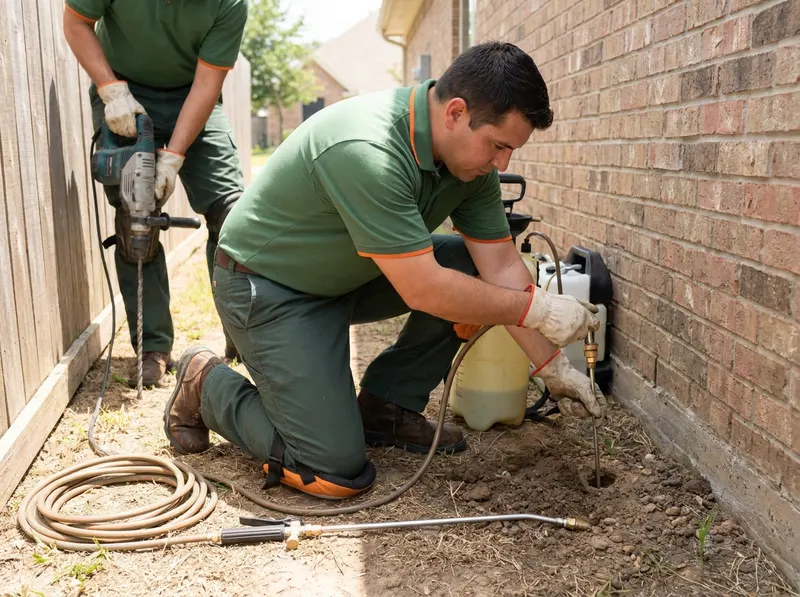
Subterranean termite treatment requires an objective biological assessment because the gumbo soils across Harris County expand during intense rain and contract during severe summer heat, creating vertical fissures along monolithic slabs. In historic pier-and-beam cottages throughout The Heights and Montrose, termites enter through mud shelter tubes built over damp grade stakes, plumbing penetrations, and crawl space piers. Properties in Memorial and River Oaks with heavy shade and mature tree canopies face high exterior moisture loads that attract subterranean foraging colonies looking for cellulose. Formosan subterranean colonies, documented extensively by the Texas A&M AgriLife Extension Service, form carton nests inside wall voids without direct soil contact when roof or flashing leaks provide sustained condensation, requiring specialized acoustic or thermal imaging to locate interior pockets.
Treatment selection depends on structural architecture, ground water tables, and landscape design. Liquid termiticide trenching creates a treated continuous defensive zone through the perimeter soil using modern non-repellent chemistries reviewed by the United States Environmental Protection Agency. Foraging workers cannot detect the compound, passing through it naturally and transferring the active agent to the reproductive caste via social grooming. For waterfront properties in Clear Lake City or sites situated near high water tables along waterways mapped by the Harris County Flood Control District, baiting systems installed according to manufacturer protocols defined by Dow AgroSciences present an alternative that eliminates drilling through decorative aggregate or limestone patios. The operational trade-off centers on intervention speed versus hardscape disturbance: liquid soil applications provide direct barrier isolation on day one, whereas subterranean bait matrices rely on seasonal worker interception and foraging cycles that require 60 to 120 days to collapse an established colony.
Structural defense in regions with expansive clay soils like Meyerland, West University Place, and Oak Forest requires continuous mechanical barriers alongside chemical intervention. Termites exploit utility penetrations, bath traps, and patio joints where the concrete patio slab abuts the main house footing. In heavily wooded environments such as Kingwood, fallen pine timber and thick mulch beds sustain subterranean nests that eventually encounter weep screeds. ArborCrest Pest Control performs exterior perimeter perimeter rod injections 6 inches below ground line, coupled with foam applications into inaccessible plumbing chases to prevent internal breach points without routine baseboard chemical sprays. Homeowners can reach ArborCrest Pest Control directly at (281) 270-1643 to arrange an initial architectural evaluation.
Every job gets a firm, written price after a free on-site visit.
For standards, safe disposal, and service guidance on pest control services in Houston, TX, useful references include U.S. EPA, ENERGY STAR, U.S. Dept. of Energy, Consumer.gov, U.S. Census Bureau, and Google Maps. General consumer and small-business resources are available from USA.gov, Better Business Bureau, FTC Consumer Advice, U.S. Small Business Administration, and Ready.gov.
Tell us about your subterranean termite treatment job in Houston and we'll send a clear, written quote, usually the same day.
 ArborCrest Pest Control